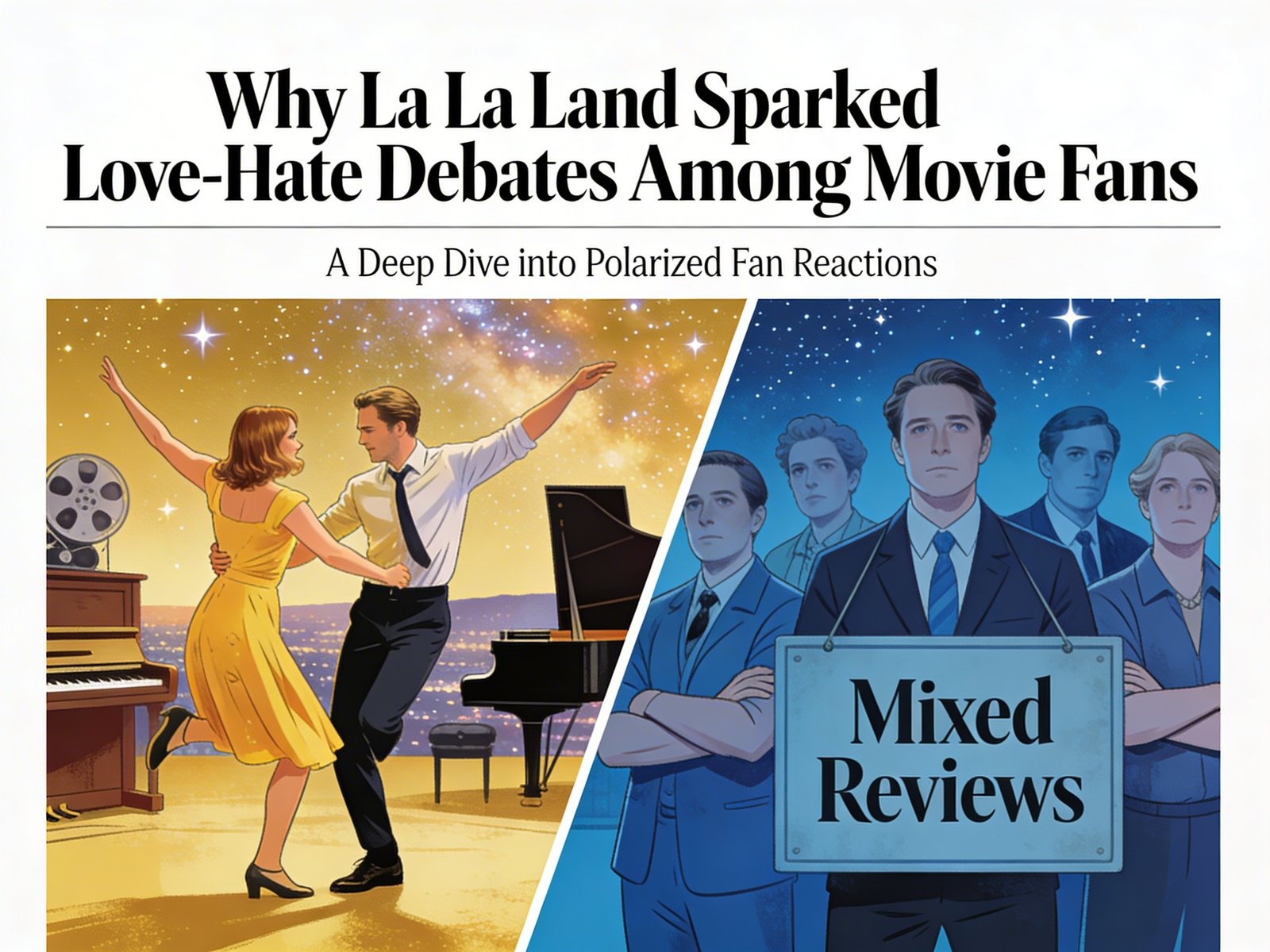
When La La Land hit theaters in 2016, it didn’t just arrive as another Hollywood musical—it landed like a meteor, splitting audiences into two passionate camps. Some viewers called it a breathtaking tribute to classic cinema, while others dismissed it as shallow nostalgia wrapped in pretty colors. The divide wasn’t small. People argued about it online, in theaters, and at dinner tables. But why did this film about two struggling artists in Los Angeles cause such a stir?
The answer lies in how the movie played with expectations. Director Damien Chazelle created something that looked like a traditional Hollywood musical but felt entirely modern. The film’s opening sequence—a massive dance number on a Los Angeles freeway—promised one thing, but the story that followed delivered something much more complicated. This tension between what we expect and what we get sits at the heart of why people couldn’t agree on whether La La Land was brilliant or boring.
The Nostalgia Trap That Worked Against It
La La Land wears its love for old Hollywood on its sleeve. From the Cinemascope logo at the beginning to the jazz music that fills every scene, the movie constantly references films from the 1950s and 60s. For some viewers, this was pure joy—a chance to relive the golden age of musicals. But for others, it felt like the movie was trying too hard to be something it wasn’t.
The problem was that many younger viewers had never seen those classic musicals. When they watched La La Land, they saw a movie that seemed to be trying to be great without understanding why those old films worked in the first place. The film’s ending, which many critics praised as bittersweet and realistic, felt to some like a cop-out—a way to have the romance without committing to it.
The Jazz Question That Split Audiences
One of the biggest points of contention was the movie’s portrayal of jazz music. Ryan Gosling’s character, Sebastian, is a jazz pianist who dreams of opening his own club. The film presents jazz as something pure and authentic that’s being destroyed by modern music. But many real jazz musicians and critics pointed out that the movie’s understanding of jazz was actually quite shallow.
The film treats jazz like a museum piece that needs to be preserved exactly as it was, rather than a living art form that’s always changing. This conservative view of art rubbed many people the wrong way, especially those who believe that creativity means moving forward, not backward. When Sebastian refuses to compromise his vision, even when it means giving up his relationship with Mia, some viewers saw this as romantic dedication while others saw it as selfish stubbornness.
The Romance That Wasn’t Traditional
Most Hollywood musicals give us love stories where the couple ends up together. That’s part of what makes them comforting and fun to watch. La La Land deliberately broke this pattern. The film’s final sequence shows us what would have happened if Mia and Sebastian stayed together—and then reveals that this perfect version didn’t actually occur.
This ending was brilliant to some and frustrating to others. People who loved it saw it as a mature statement about how life doesn’t always give us what we want, but that doesn’t mean it’s not beautiful. Those who hated it felt cheated—they came for a musical romance and got something that felt more like a depressing indie drama.
The Visual Style That Divided Opinions
La La Land’s cinematography, handled by Linus Sandgren, is undeniably beautiful. The film uses long, unbroken takes and vibrant colors to create a dreamlike quality. But this very beauty became a point of criticism. Some viewers felt that the movie was all style and no substance—that it looked amazing but didn’t have much to say.
The dance sequences, while impressive, don’t have the complexity of classic musicals. Emma Stone and Ryan Gosling are good actors, but they’re not trained dancers. Some critics argued that the film’s attempt to recreate the magic of old Hollywood fell flat because it didn’t have the technical mastery that made those films work.
The Oscar Controversy That Amplified Everything
When La La Land was mistakenly announced as the Best Picture winner at the 2017 Academy Awards (before the error was corrected and Moonlight was named the actual winner), it became more than just a movie—it became a cultural moment. This controversy made people even more passionate about their opinions.
Those who loved the film felt validated by its Oscar success, while those who were critical saw the mistake as symbolic of Hollywood’s tendency to celebrate safe, nostalgic choices over more challenging or diverse films. The Moonlight mix-up became a Rorschach test for how people felt about the movie itself.
The Cultural Context That Mattered
La La Land came out during a time when Hollywood was being criticized for lack of diversity and for making too many sequels and reboots. In this context, a movie about two beautiful white people pursuing their dreams in Los Angeles felt to some like exactly the wrong kind of story to celebrate.
The film’s complete lack of diversity in its main cast, despite being set in one of the most diverse cities in the world, became a major point of criticism. Some viewers couldn’t get past this to enjoy the movie’s other qualities, while others felt that bringing politics into a simple musical was missing the point.
Why Some People Still Defend It
Despite all the criticism, many people still passionately defend La La Land. They argue that the film’s goal wasn’t to be a perfect recreation of old musicals, but to use the language of those films to tell a modern story about compromise and growing up. The fact that it makes some viewers uncomfortable or angry might actually be part of its point.
Fans of the movie also point out that it’s rare to see original musicals made in Hollywood at all. In an era of franchises and adaptations, La La Land took a big risk by trying to revive a genre that many people thought was dead. Even if it didn’t work for everyone, they argue, it was worth making.
The Legacy That’s Still Being Written
Five years after its release, La La Land continues to generate discussion. Film schools use it as a teaching tool for both its successes and its failures. New musicals are still being compared to it, either trying to capture its magic or deliberately doing the opposite.
The movie’s greatest achievement might be that it made people care about musicals again, even if they didn’t always agree on whether that was a good thing. It proved that there’s still an audience for original, ambitious filmmaking, even if that audience is divided about what they actually want to see.
What This Means for Modern Cinema
La La Land’s divided reception tells us something important about how audiences have changed. Modern viewers are more sophisticated and more critical than ever before. They can spot references and homages, but they also want movies to have something new to say.
The film’s struggle to balance nostalgia with originality reflects a larger challenge facing Hollywood. How do you make something that honors the past while still feeling relevant to today’s audiences? La La Land’s answer—to create a beautiful surface that references classic films while telling a more complicated story underneath—worked for some and failed for others.